How AI Is Reshaping Business in 2026: What the Recent Data Shows










Artificial intelligence has moved from conference-stage hype to boardroom budgets in 2026. What was once discussed as a distant possibility is now shaping how companies plan spending, hire staff, organise work and talk to investors. The shift is not happening in one place or in one industry. It is visible in stock markets, in central bank commentary and in the software that office workers open each morning.
This article connects those recent signals. Taken together, they suggest a technology that is becoming embedded in the everyday economy, even as questions about valuation, risk and governance grow louder. Understanding both sides of that picture matters for business leaders, investors and anyone whose working day is changing because of it.
The money is following the technology
Investor enthusiasm for artificial intelligence has remained one of the defining features of financial markets in 2026. Companies associated with the chips, infrastructure and software that power AI systems have attracted sustained attention, and market sentiment has often turned on how quickly demand for computing capacity appears to be growing. When a leading chipmaker reports strong interest in its products, the reaction tends to spread well beyond that one company, lifting related suppliers, software firms and the broader technology sector with it.
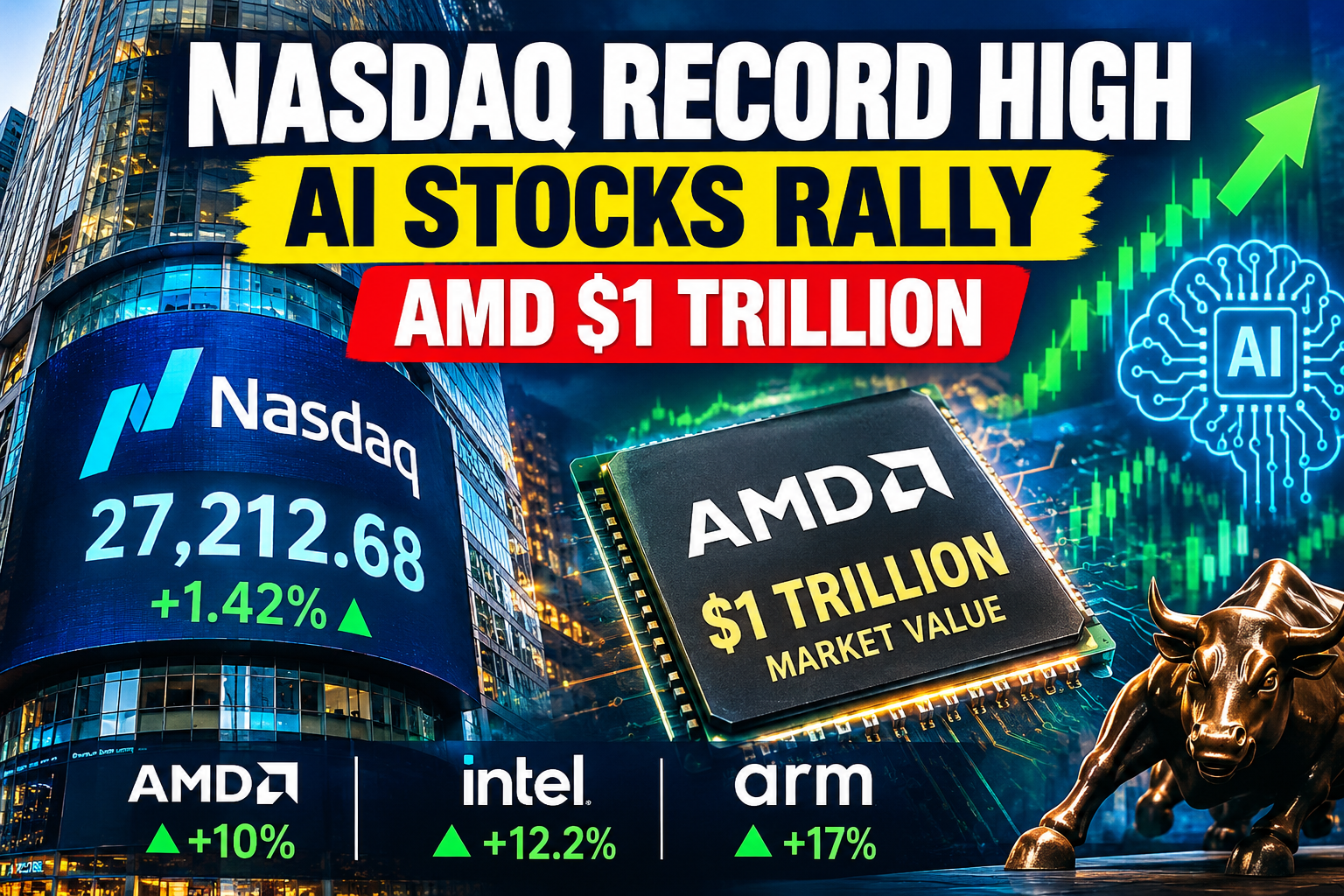
That pattern was on display in the recent market rally described in our report on the Nasdaq record high as AMD leads the AI rally. The episode illustrated how closely market confidence is now tied to the AI supply chain. Investors are not only betting on individual products; they are betting on a prolonged build-out of data centres, processors and the energy and networking systems that support them. In that sense, the rally was less about a single trading session and more about a wider belief that AI infrastructure spending will remain a priority.
There are good reasons for that belief. Businesses across many sectors are experimenting with AI tools, and the computing demands of training and running large models are substantial. At the same time, the concentration of enthusiasm carries its own questions. When so much market optimism rests on a relatively small group of companies and a shared expectation of rapid growth, any disappointment — a slower rollout or tighter budgets — can have an outsized effect.
Regulators are urging caution
While markets have embraced the AI boom, regulators have begun to sound a more careful note. Central banks, whose job includes watching for risks that could spread through the financial system, are paying close attention to how quickly valuations have risen and how exposed banks, funds and other institutions may have become to a sudden change in sentiment. Their concern is not that AI itself is a problem, but that rapid enthusiasm can create fragility when it is combined with borrowing and crowded positions.
That concern was set out in the warning covered in our report on the Bank of England warns AI boom could trigger market shocks. The message was, in essence, that strong growth in one part of the market does not remove the risk of a sharp correction. If expectations run ahead of what companies can deliver in the near term, prices can fall quickly, and the effects can reach beyond the technology sector. Pension funds, lenders and everyday savers can all feel the consequences when a widely held asset class loses value in a short period.
Such warnings should not be read as a prediction that a crash is imminent. Central banks regularly highlight risks precisely so that firms and investors can prepare for them. A technology can be genuinely transformative over the long term while still producing periods of excess and adjustment in the short term. The regulatory voice in 2026 is therefore an important counterweight to market excitement: it asks the financial system to enjoy the opportunity without forgetting the risks.
AI is entering everyday office work
Away from trading floors and central bank speeches, the most tangible change may be happening in ordinary offices. AI assistants and agents are increasingly built into the tools that workers already use for email, documents, meetings and planning. Rather than requiring staff to learn an entirely new system, these tools appear inside familiar software, offering to draft messages, summarise long documents, prepare meeting notes and help organise tasks. For many workers, AI is no longer a separate product to visit; it is a feature of the working day.
This shift towards embedded, everyday AI is illustrated by the developments described in our report on the Microsoft Copilot super app and AI agents. The idea behind such products is that AI agents can take on routine and repetitive work, freeing people to focus on judgement, creativity and relationships with customers and colleagues. An agent might gather information from several sources, prepare a first draft for a human to review, or keep track of follow-up actions after a meeting.
The change also raises practical questions for employers. Staff need guidance on when to trust an AI-generated draft and when to check it carefully. Companies need clear rules about what information can be shared with an AI tool, how outputs should be reviewed and who is responsible when something goes wrong.
What This Means — Our Analysis
The evidence from markets, regulators and workplaces points to a balanced conclusion. The productivity gains from AI appear real, even if they are uneven. Some tasks — drafting, summarising, searching large volumes of information and handling routine queries — are already becoming faster and easier. Over time, those gains could add up to meaningful improvements in how organisations operate. At the same time, valuations and concentration risk deserve care. Much of the current market enthusiasm rests on expectations about future growth, and expectations can change. A technology that transforms the economy over a decade can still experience difficult periods along the way.
For businesses, the sensible response is adoption with governance. That means starting with clear use cases where AI can genuinely help, measuring the results honestly, and putting rules in place for data, accuracy and accountability before rolling tools out widely. It means investing in staff training, keeping a human in the loop for important decisions, and avoiding dependence on any single supplier or system. Companies that take this measured approach can capture the benefits of AI while limiting the risks — and they will be better prepared whether the next phase of the AI story brings rapid growth, a period of adjustment, or, most likely, a mixture of both.
Sources: Bank of England, Nasdaq, Microsoft