Apple vs Open AI: The Trade Secrets Lawsuit Explained Simply









Big news is shaking up the Technology News world right now. Apple has taken Open AI to court, claiming the AI giant stole confidential company secrets to build its own products. If you’ve been seeing headlines about this but aren’t sure what’s actually going on, here’s a simple, complete breakdown of everything you need to know.
What Actually Happened?
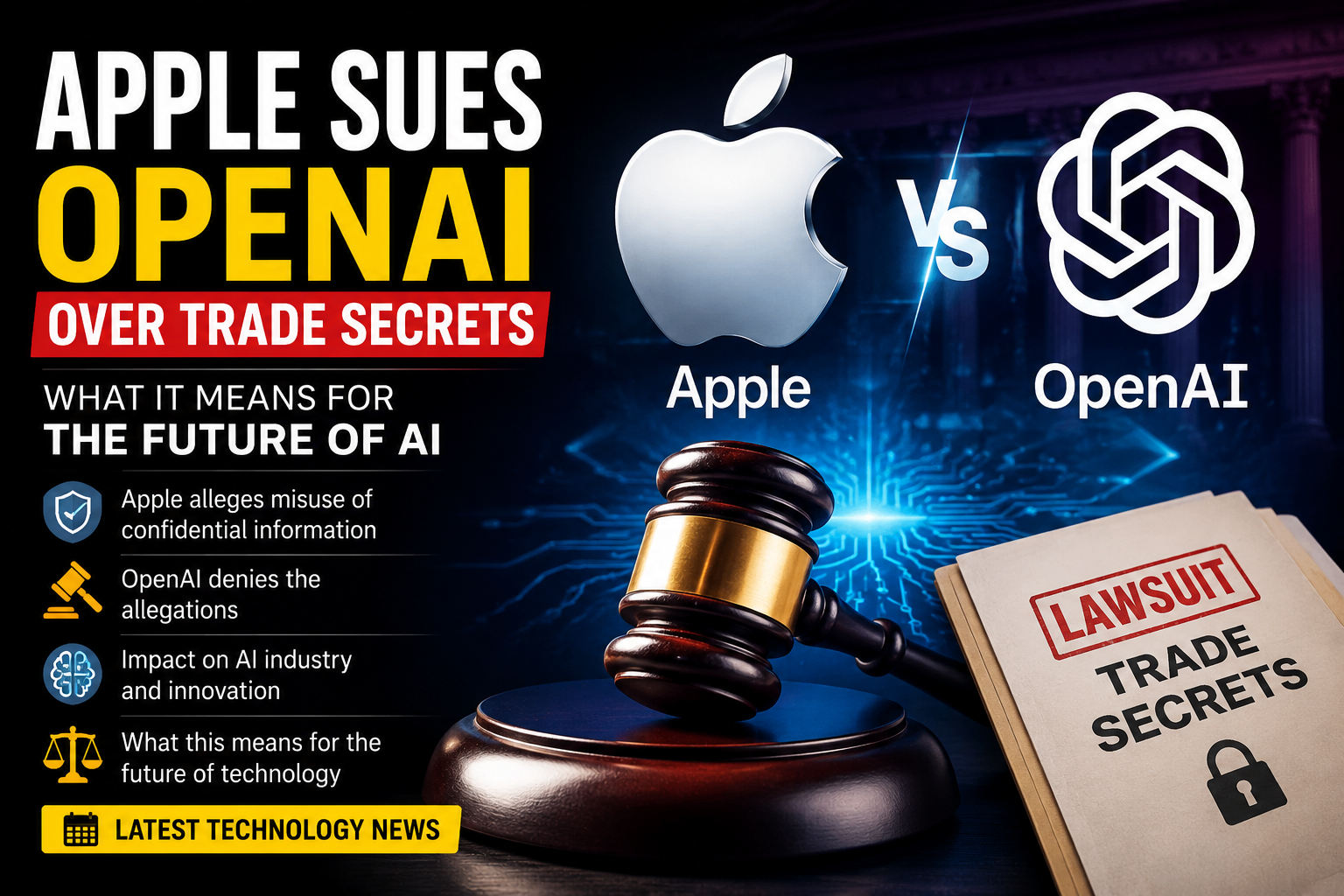
On July 10, 2026, Apple filed a lawsuit against Open AI in a federal court in California. In simple terms, Apple is saying that people who used to work at Apple took confidential information with them when they left to join Open AI and that Open AI used this stolen information to help build its own hardware products.
This isn’t a small claim. Apple’s legal filing runs 41 pages long and includes very specific accusations, names, and even copies of internal messages.
Who Is Involved?
Two former Apple employees are at the center of this case.
Tang Tan used to be a top designer at Apple. He worked on the iPhone and Apple Watch for years before leaving in 2024. He eventually joined a company started by Jony Ive (Apple’s former design chief), which OpenAI later bought. Today, Tang Tan is OpenAI’s head of hardware.
Chang Liu is the second name in the lawsuit. He worked as an engineer at Apple for eight years before joining OpenAI in January 2026. Apple claims Liu held onto his old work laptop even after leaving, and used it to secretly log into Apple’s cloud storage. From there, he allegedly downloaded private technical files about products Apple hadn’t announced yet.
Apple also says Liu shared some of this private information with other Apple employees who were thinking about applying for jobs at Open AI even coaching them on what topics to prepare for during interviews.
It’s Not Just Two People
Apple’s lawsuit points out something bigger: more than 400 former Apple employees are now working at Open AI. Apple is using this number to argue that this isn’t just one bad decision by one person it suggests a much larger pattern of information leaking from Apple to its AI rival.
There’s also a claim involving one of Apple’s manufacturing partners. Apple says Open AI convinced this partner to share a secret metal-finishing process used in Apple’s products, by making the partner believe Apple had already given permission. Open AI’s hardware team, called io Products, is also named in the lawsuit.
How Has Open AI Responded?
Open AI has firmly pushed back against all of these claims. A company spokesperson said Open AI has zero interest in using anyone else’s trade secrets and is fully focused on building its own original technology.
Interestingly, there were earlier reports this year suggesting Open AI itself was thinking about suing Apple this was over some frustration with how their existing partnership (which allows Chat GPT to work inside Siri) was actually working out. Apple has made clear that this new lawsuit is a completely separate matter from that partnership.
Why Is This Such a Big Deal?
This case matters for a few important reasons:
Timing:
Open AI is reportedly getting ready for what could be one of the largest public stock listings (IPO) in tech history. A serious lawsuit like this adds legal risk right when the company needs a clean reputation the most.
Hardware ambitions:
For a while now, there have been rumors that Open AI is working on its own physical gadgets possibly a smart speaker or even a phone-like device. Apple’s lawsuit suggests the company believes some of its own secret research may have found its way into these hardware plans. You can read our full breakdown here: Open AI’s First AI Hardware Device: Latest Technology News .
Industry-wide impact:
As AI companies compete harder than ever for talent and technology, cases like this could push every major tech company to tighten up how they handle employee exits, device returns, and confidential data.
Is Apple Right or Wrong
Right now, nobody knows. These are just allegations made by Apple nothing has been proven in court yet. Open AI will get its full chance to respond and defend itself. Cases like this can take many months, sometimes longer, before a judge or jury reaches a final decision.
What Is Apple Asking For?
Apple wants two main things from the court:
- Money to cover the damages it believes it suffered
- A legal order stopping Open AI from using or sharing any of Apple’s trade secrets going forward
Conclusion
This lawsuit is a big deal not just because of who’s involved, but because of what it represents a battle over trust, secrecy, and fair competition in the fast moving world of AI. As both companies fight this out in court, the rest of the tech industry will be watching closely, since the outcome could shape how AI companies handle confidential information for years to come.
Stay connected with us for the Best Tech News, AI updates, and the latest developments from the world of technology.