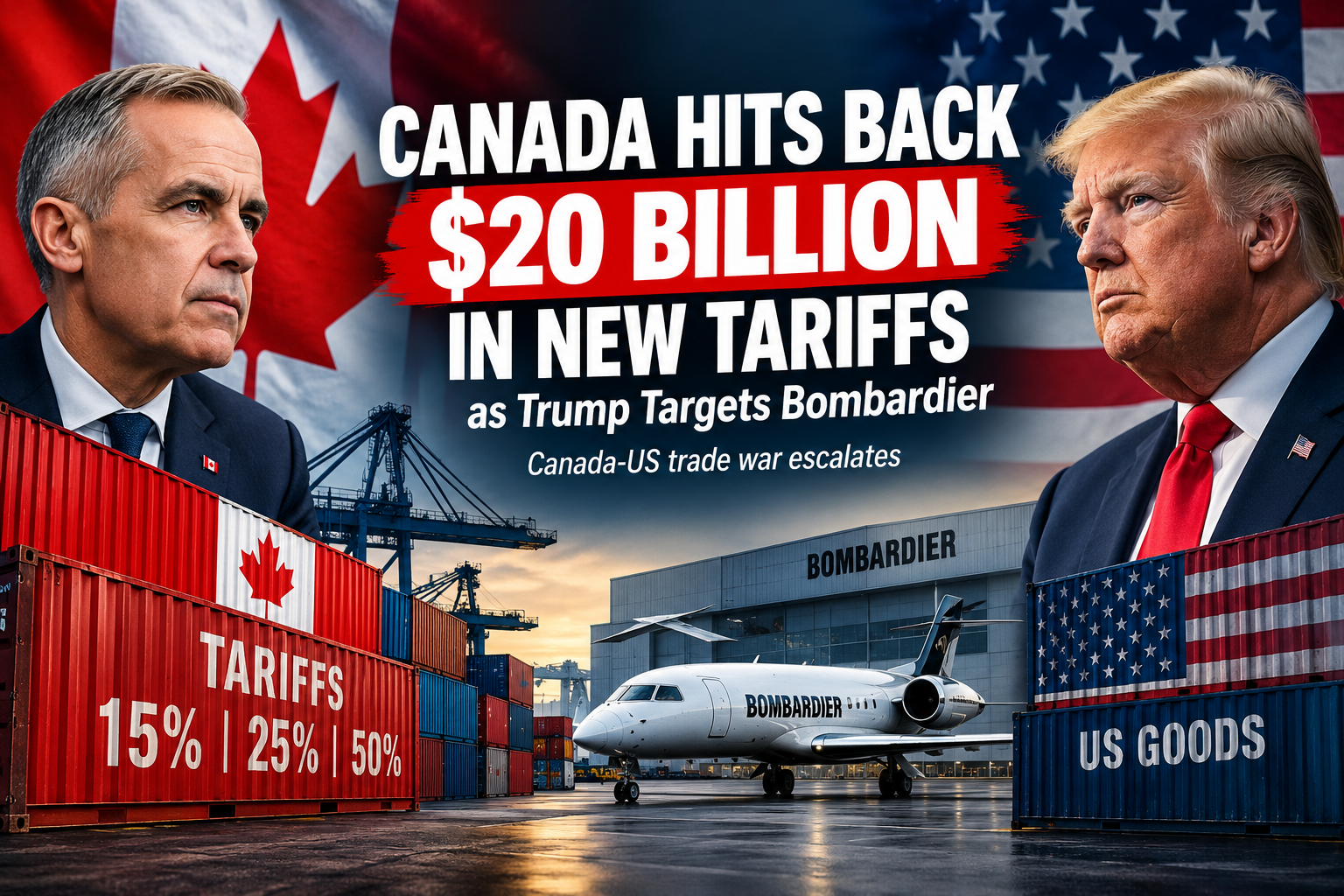
Canada Hits $20 Billion of US Goods With New Tariffs as Trump Targets Bombardier










Canada US trade war tensions have escalated sharply after Canada imposed new retaliatory tariffs on approximately C$27.6 billion, or about US$20 billion, of American goods on September 8, 2026.
The new measures came into effect at 12:01 a.m. Tuesday and include tariffs of 15%, 25% and 50%, depending on the product. The move follows Washington’s decision to impose 50% tariffs on a similar value of Canadian goods.
The latest escalation has now moved beyond a simple tariff dispute. President Donald Trump has also threatened to block Canadian aircraft manufacturer Bombardier from selling its jets in the United States unless the company increases production in America.
For businesses, consumers and investors, the dispute could create higher costs, supply chain uncertainty and additional pressure on one of the world’s most important trading relationships.
Why Canada Imposed New Tariffs
Canada’s latest tariffs are a direct response to new US trade measures.
Latest Business News : The two countries have been locked in a prolonged trade dispute, with negotiations failing to produce an agreement that could prevent another round of tariffs. Canada has argued that it needs to respond to US duties while protecting its own economic interests.
The new Canadian measures are designed to broadly match the economic impact of the US tariffs. They cover around C$27.6 billion in US imports, making this one of the most significant new steps in the current dispute.
Prime Minister Mark Carney has also emphasized the importance of reducing Canada’s dependence on the US economy, suggesting that the dispute could have longer-term consequences for Canada’s trade strategy.
Which US Products Face New Tariffs?
The Canadian counter-tariffs cover a broad range of products.
Some of the most affected categories include:
- Steel and aluminum products
- Furniture
- Clothing and apparel
- Dairy products and cheese
- Appliances
- Agricultural equipment
- Pulp and paper
- Electronics
- Machinery and other manufactured goods
Tariff rates vary according to the product. Some items face a 15% duty, while others are subject to 25% or 50% tariffs.
That means the impact will not be identical across industries. Companies importing heavily tariffed products could face significantly higher costs than businesses dealing with goods in lower tariff categories.
Trump Escalates Pressure on Bombardier
The trade dispute took another dramatic turn when Trump targeted Bombardier, the Canadian aircraft manufacturer.
Trump threatened to prevent Bombardier from selling its aircraft in the United States unless the company moves more manufacturing to American soil. The threat adds a company-specific dimension to what had largely been a broader tariff dispute.
Bombardier has a substantial US presence. The company says it works with thousands of American suppliers and has operations across multiple US states.
That makes the threat particularly significant because restricting Bombardier could also affect American workers, suppliers and businesses connected to the company’s US operations.
Bombardier Shares Come Under Pressure
Investors reacted quickly to the latest development.
Bombardier shares fell around 6% following Trump’s threat, reflecting concerns about the company’s exposure to the US market and the possibility of further restrictions.
The market reaction highlights an important feature of the current trade dispute: companies can face financial pressure even before new regulations are fully implemented.
Investors are now watching whether Trump’s comments result in an actual restriction on Bombardier sales or remain part of the broader political pressure surrounding the negotiations.
How Could the Tariffs Affect Businesses?
Tariffs increase the cost of imported goods. Businesses then have several choices.
They can absorb the additional expense, negotiate with suppliers, find alternative sources or pass some of the cost on to customers.
For manufacturers that rely on imported materials, higher tariffs can therefore affect profit margins.
Industries such as steel, aluminum, electronics, appliances and agricultural equipment could face particular pressure because many companies depend on cross-border supply chains.
Businesses may also have to spend more time dealing with customs requirements and determining which products are covered by the new tariff schedule.
Could Consumers Pay More?
Consumers could eventually feel some of the impact through higher prices.
If importers pass tariff costs down the supply chain, products such as appliances, furniture, clothing and certain food products could become more expensive.
However, the size and timing of any price increase will depend on how companies respond.
Some businesses may absorb part of the cost to remain competitive, while others may search for suppliers outside the US.
This means tariffs do not automatically translate into an immediate price increase for every product. The longer the trade dispute continues, however, the greater the potential for businesses to adjust pricing and sourcing strategies.
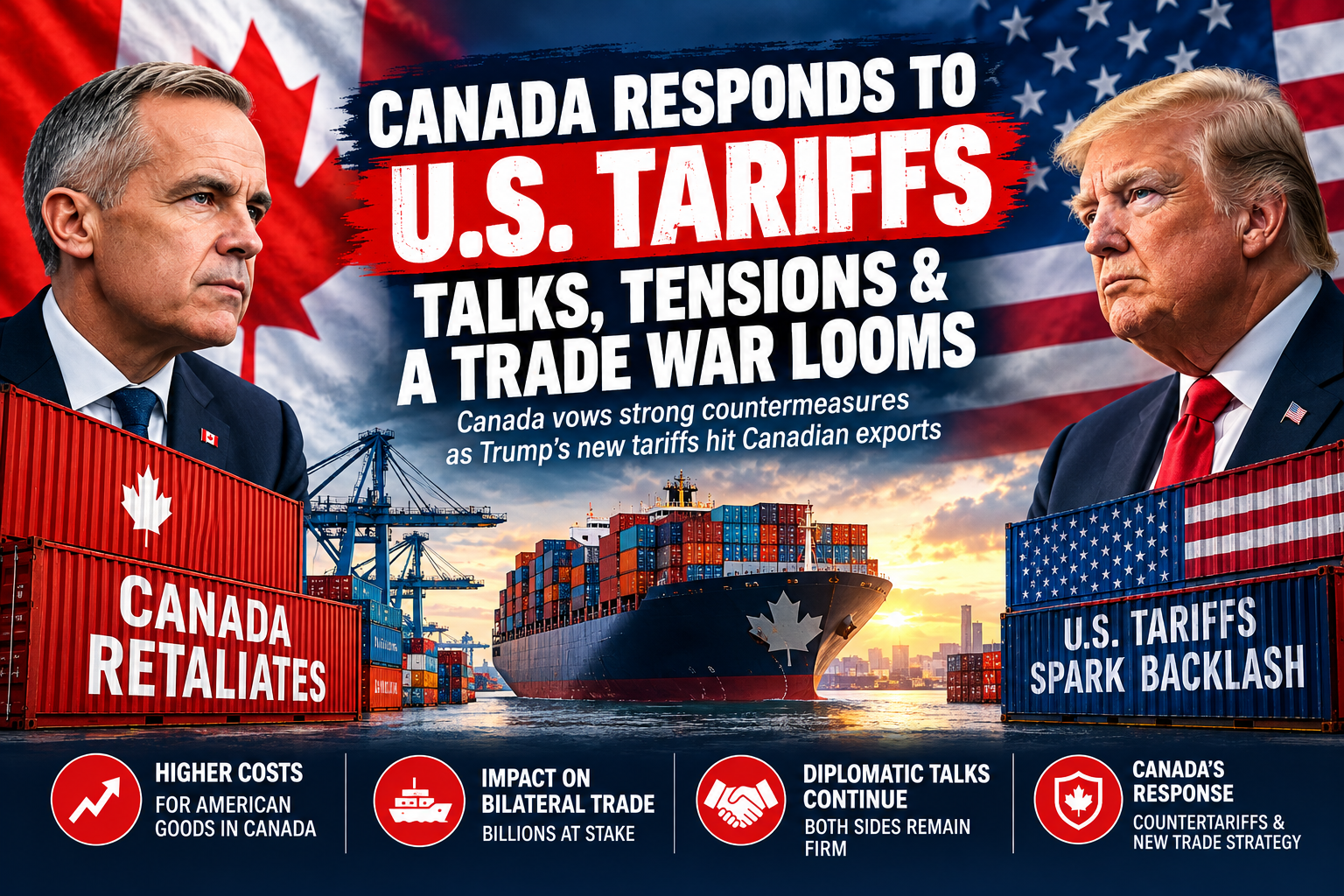
Why the Trade War Matters to Investors
Investors generally dislike uncertainty, particularly when it affects major economies and integrated supply chains.
The latest Canada US trade dispute creates uncertainty around company earnings, manufacturing costs, investment decisions and future trade policy.
Industries directly involved in cross-border trade could experience greater volatility.
Aerospace is one example. Bombardier’s stock reaction shows how quickly political developments can affect market expectations.
Steel, aluminum, manufacturing and consumer goods companies could also remain sensitive to further tariff announcements.
What Happens to USMCA?
Another major question is what the escalating dispute means for the United States Mexico Canada Agreement (USMCA).
The agreement has supported deeply integrated supply chains across North America, particularly in manufacturing, automobiles, agriculture and other industries.
A prolonged tariff battle could make companies reconsider where they manufacture products and where they source components.
That could eventually lead to changes in investment decisions and supply chains across the region.
For companies that have spent years building cross-border operations, changing suppliers or factories is not a quick process. It can require new contracts, equipment, workers and transportation arrangements.
Canada and the US Still Need Each Other
Despite the growing tensions, the economic relationship between Canada and the United States remains extremely important.
The two countries share a long border and deeply connected industries. Thousands of businesses depend on the movement of goods, components and services between the two markets.
That is why prolonged tariffs could create costs on both sides.
Canadian companies could lose access to parts of the US market, while American exporters could face higher costs and reduced sales in Canada.
The political dispute may therefore produce economic consequences beyond the products directly affected by the tariffs.
What Could Happen Next?
The next stage of the dispute will depend heavily on negotiations between Ottawa and Washington.
Several developments will be important to watch:
- Further US tariffs: Washington could respond with additional trade measures.
- Bombardier restrictions: Investors will watch whether Trump’s threat becomes an actual US sales restriction.
- New negotiations: Both governments could return to the negotiating table to prevent further escalation.
- Business reaction: Companies may begin changing suppliers and production locations.
- Consumer prices: Economists will watch for evidence that tariffs are feeding into inflation.
- Market volatility: Stocks exposed to Canada US trade could remain sensitive to political announcements.
The Bigger Economic Picture
The latest tariffs show that the Canada US trade relationship has entered another difficult phase.
Canada’s decision to impose duties on roughly C$27.6 billion of US imports represents a significant response to Washington’s trade policy. At the same time, Trump’s decision to target Bombardier demonstrates how quickly the dispute can move beyond traditional tariffs and toward individual companies.
For businesses, the biggest concern may not be one individual tariff. It is the uncertainty over what comes next.
Companies need to make investment and supply chain decisions without knowing whether another round of tariffs could arrive soon.
Conclusion
The Canada US trade war has entered a new phase after Ottawa imposed tariffs of up to 50% on about C$27.6 billion of American imports. Trump’s threat against Bombardier has added another layer of uncertainty, bringing a major Canadian company directly into the dispute.
For consumers, businesses and investors, the key question now is whether the two countries can return to negotiations or continue escalating their trade measures. If the conflict continues, its effects could spread through supply chains, product prices, company earnings and investment decisions across North America.
For now, businesses on both sides of the border are watching Washington and Ottawa closely for the next move. Stay Connected With Tech News