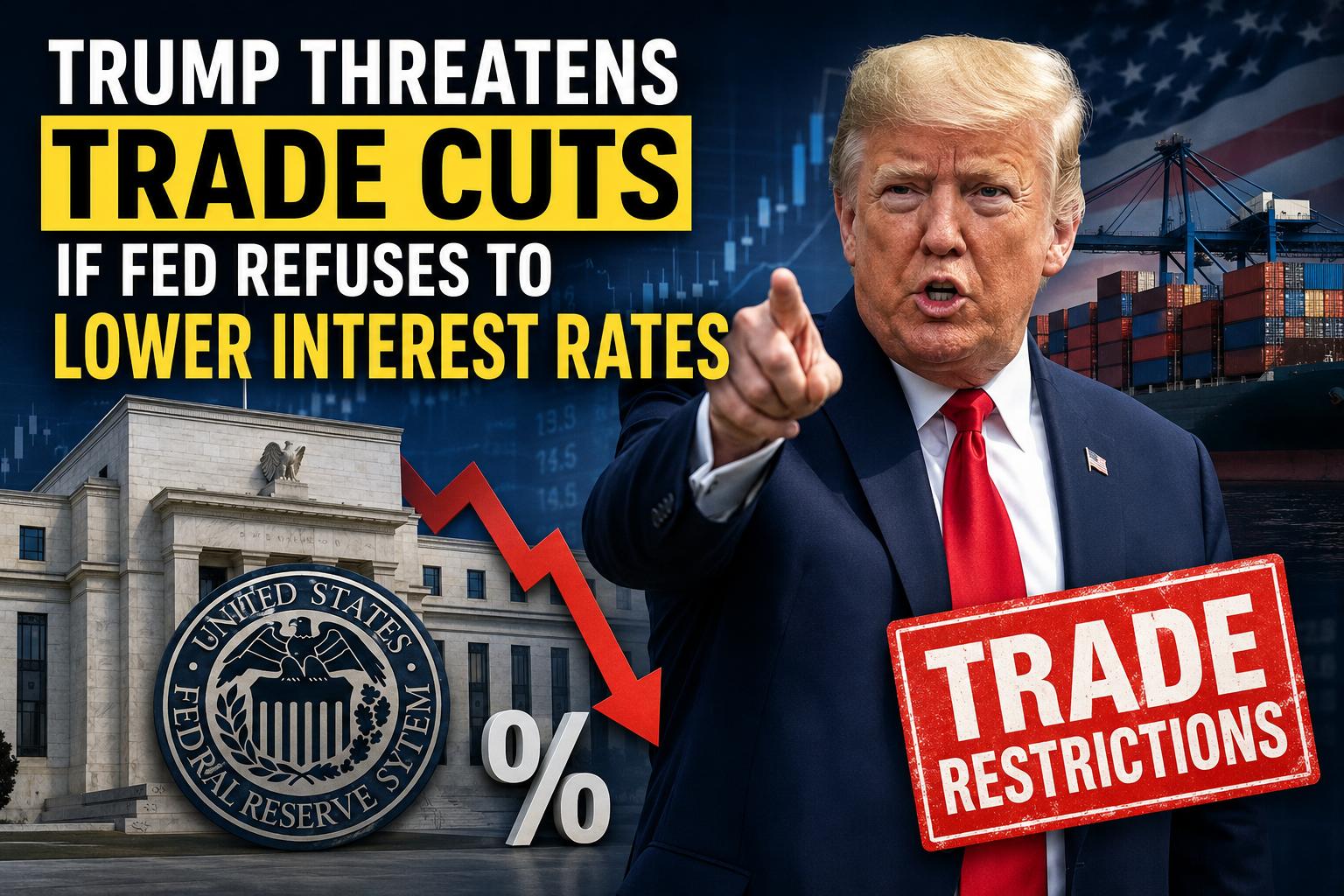
Trump’s Warning: “Cut Rates or I’ll Cut Trade!” 🇺🇸💸








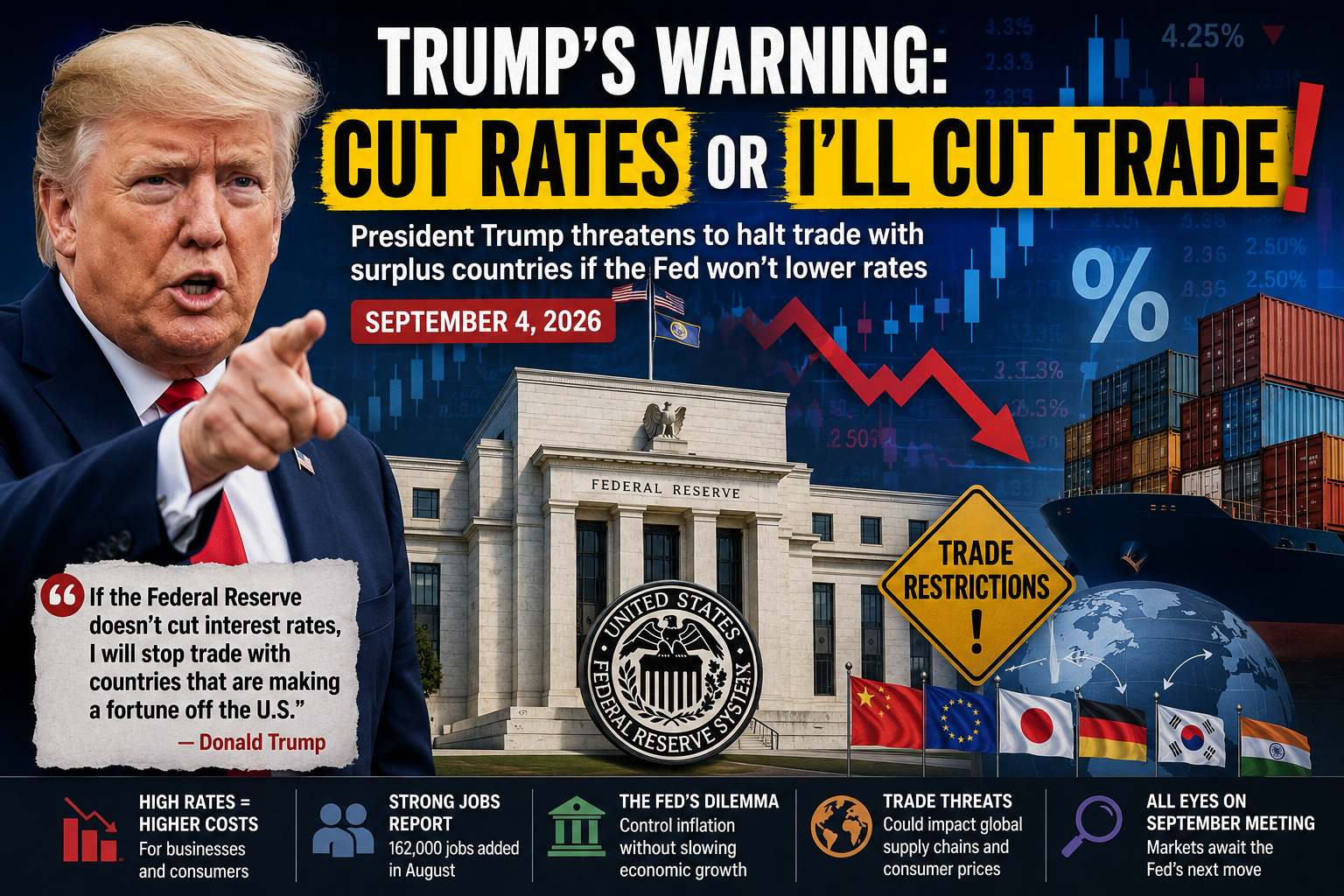
The warning landed on Friday, September 4, 2026, via a Truth Social post, where Trump once again slammed the Fed for keeping rates “too high.”
🗣️ What Exactly Did Trump Say?
Trump said he could stop trading with countries that have a trade surplus with the U.S. if the Fed doesn’t cut interest rates.
His core argument: high U.S. interest rates are putting American businesses at a disadvantage in the global market.
⚠️ Important: this is a warning, not an actual policy yet. No trade has been officially halted with any country. And the Fed operates independently it doesn’t take orders from the White House. That’s exactly why this statement is turning heads.
💡 Why Does Trump Want Lower Rates?
Interest rates ripple through the entire economy:
- 🏭 Businesses — expensive borrowing means costlier factories, equipment, and expansion
- 🏠 Consumers — mortgages, car loans, and credit cards get pricier
- 📈 Lower rates = cheaper credit = more investment and spending
Trump believes cutting rates would make the U.S. economy more competitive. But the Fed has its own worry: if the economy overheats while inflation is still elevated, cutting rates could make prices worse.
📊 A Strong Jobs Report Just Complicated Everything
On the very same day Trump made his statement, a surprisingly strong jobs report dropped:
| Metric | Result |
|---|---|
| 🧑💼 New jobs (August) | 162,000 |
| 📉 Unemployment rate | 4.1% (unchanged) |
| 🔮 Economists expected | just 56,000 |
That’s a massive beat. It shows the labor market has more muscle than expected which is exactly the kind of data that gives the Fed less reason to rush into a rate cut. In fact, some market pricing has shifted toward the possibility of tighter policy instead.
🏦 The Fed’s Balancing Act
The Fed now faces a tricky call:
- Cut rates too soon → inflation could stay elevated
- Keep rates high too long → economic growth could slow
The September policy meeting will weigh inflation, wages, employment, and consumer spending before any decision is made.
🌍 Trade + Interest Rates: An Unusual Combo
Trump’s statement links two normally separate policy lanes:
- Monetary policy — set independently by the Fed
- Trade policy — controlled by the White House
If trade restrictions actually happened, here’s what could follow:
- 🏭 U.S. manufacturers could struggle to source raw materials and components
- 🛒 Imported goods could get more expensive
- 💰 Consumers could feel the pinch
- 🏗️ Some industries might reshore production creating new jobs, but that takes years to build out
📈 Markets Are Watching the Fed Like a Hawk
Investors reacted sharply to the jobs data, since rate expectations move stocks, bonds, and currencies. Reuters reported that market pricing for a September rate hike actually rose after the employment numbers came out.
So there’s a real tension here: Trump is pushing for lower rates while markets are increasingly pricing in the opposite. That gap could be one of the defining financial stories of the month.
🔍 What Happens Next?
- 📅 Next big event: the Fed’s September policy meeting
- 👀 Investors will be watching upcoming inflation data closely
- ⚖️ If inflation cools → case for rate cuts gets stronger
- 🔥 If inflation stays hot with strong jobs → the Fed could hold firm or even tighten further
The Bigger Picture
This trade threat looks more like a signal of mounting political pressure on the Fed than an imminent policy shift. No formal trade halt has been announced against any deficit country.
But here’s the irony: if trade restrictions actually pushed up the price of imports, that would fuel inflation which would make the Fed even less likely to cut rates. In other words, the strategy could backfire against Trump’s own goal.
✅ What Businesses Should Track
- 💵 Which way rates move next
- 🌐 Any concrete new trade restrictions
- 📦 Import costs and inflation pressure
- 🛍️ Consumer spending power
- 💱 Dollar strength/weakness
🏁 Bottom Line
Trump’s latest warning adds a new twist to an already tense economic story. Strong jobs data, a push for lower rates, and a trade threat are all colliding at once making September 2026 a pivotal month to watch.
The real story isn’t the warning itself it’s whether the Fed’s actual September decision and upcoming inflation data confirm or defuse the tension building around it.
Stay Connect With Tech News