US and China Announce Tariff Cuts Covering $60 Billion of Goods: What’s In, What’s Out, and What Happens Next










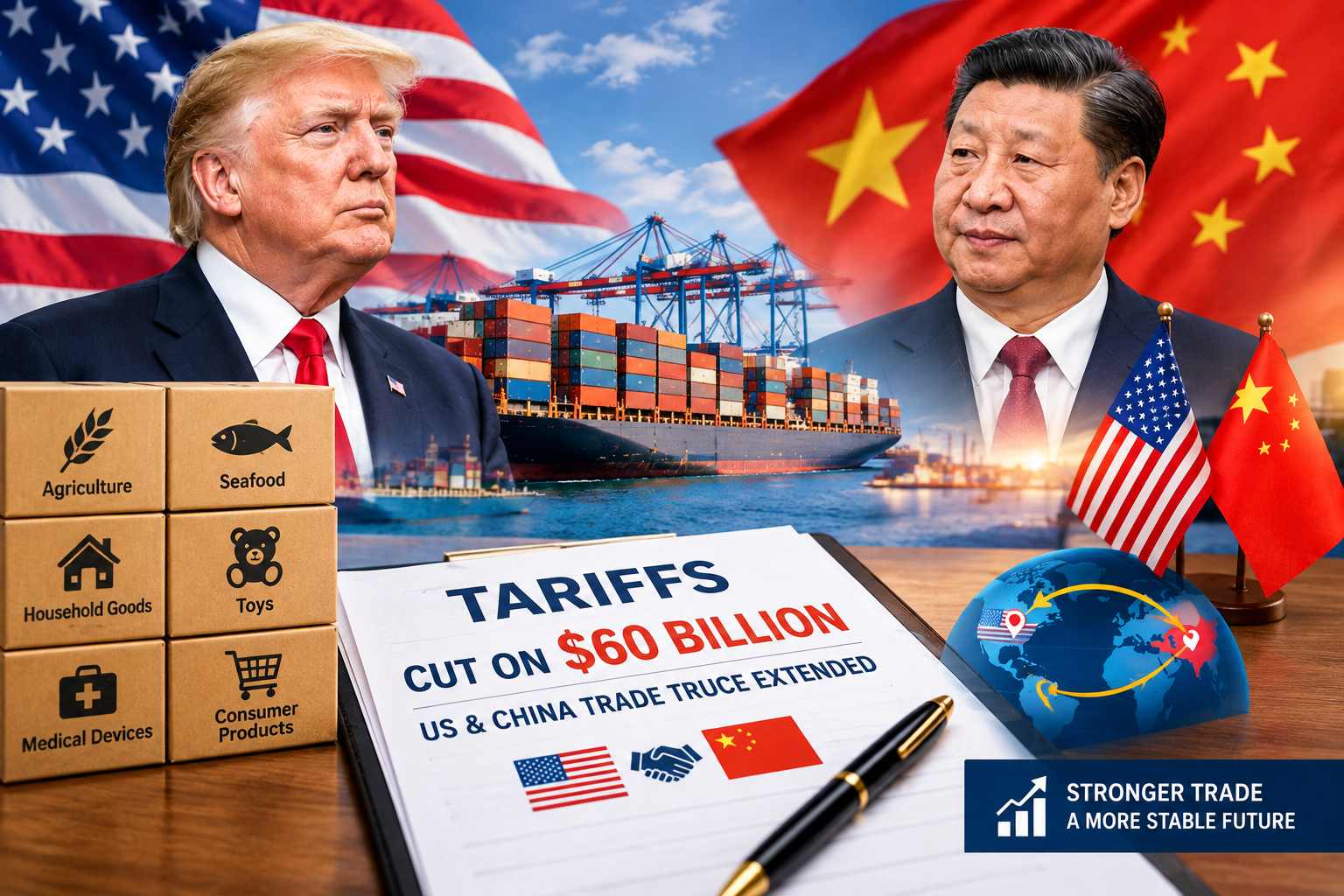
The United States and China have announced tariff reductions covering around $60 billion worth of goods traded between the two countries, marking a new step in their efforts to stabilize bilateral trade.
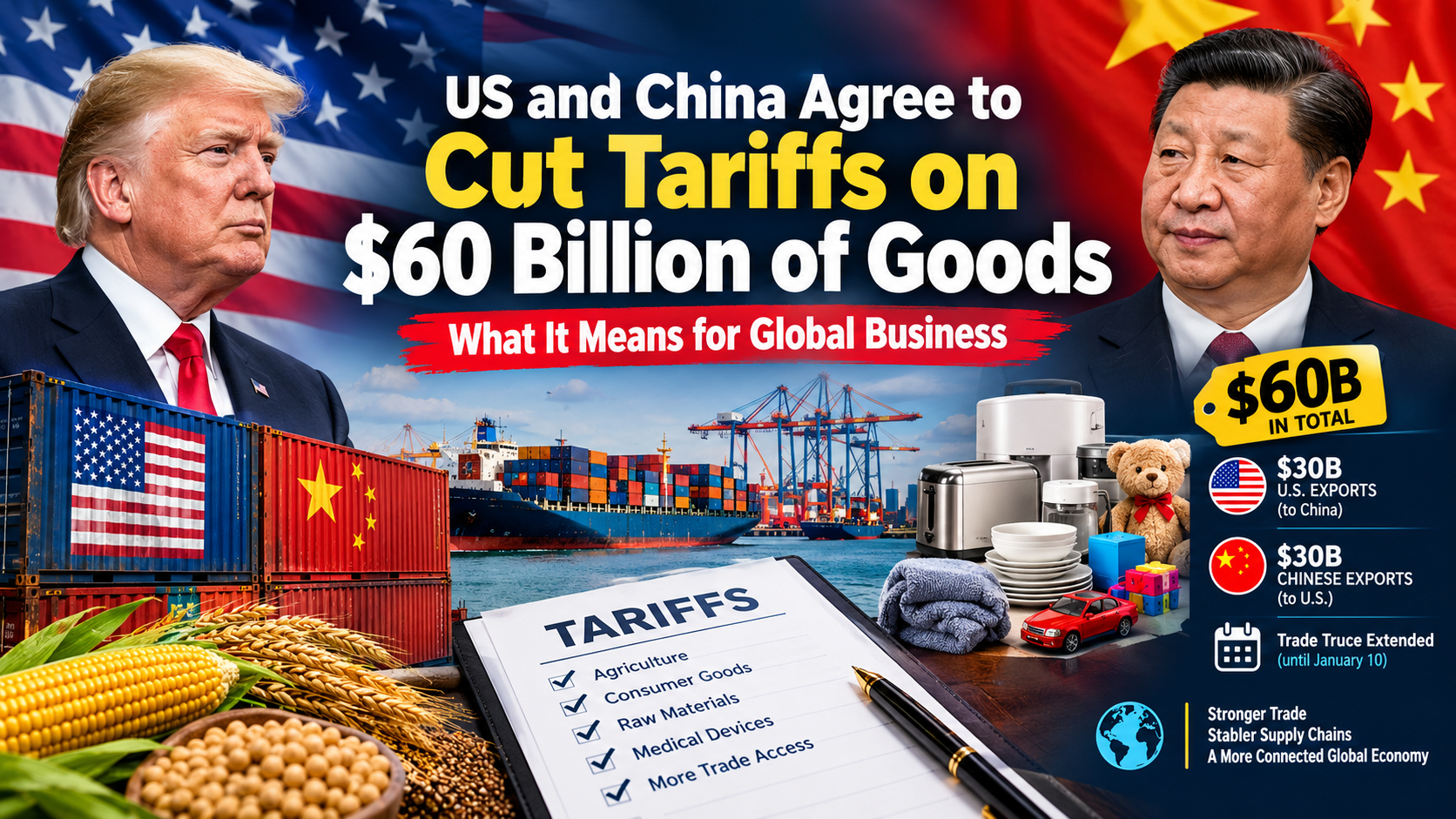
Latest Business News: The framework covers a wide range of products. These include American agricultural goods such as corn, wheat, meat and dairy products, as well as Chinese household appliances, toys, tableware and other consumer products. The two countries have also extended their existing trade truce, giving businesses more time to prepare for further negotiations.
However, the announcement does not mean that every tariff has immediately changed at the border. Under the new 30-for-30 framework, each country has recommended around $30 billion of non-sensitive goods for more favourable tariff treatment. The implementation of those changes still depends on domestic procedures and official tariff schedules.
That distinction is important for exporters, importers and consumers because the final economic effect will depend on when the tariff changes actually take effect.
What the US and China Actually Announced
The latest framework is being described as “30-for-30.”
Under the US-China Board of Trade, both countries identified approximately $30 billion worth of non-sensitive goods from the other country that could receive more favourable tariff treatment.
Together, the two lists represent about $60 billion in bilateral trade.
The US Trade Representative said the framework could improve market access for about 30% of US exports to China. The products selected are mainly outside the most sensitive technology and national-security categories.
Reuters reported that the agreement covers products ranging from US corn and other agricultural goods to Chinese household appliances and toys.
The framework is therefore significant, but it should not be confused with a complete US-China trade agreement. Many of the largest disputes between the two economies remain unresolved.
Which American Products Are Included?
China’s list focuses heavily on American agricultural and food-related exports.
Products identified for tariff reductions include:
- Corn
- Wheat
- Sorghum
- Meat
- Dairy products
- Vegetable oils and meals
- Fish and seafood
- Logs and wood products
- Cosmetics
- Medical devices
Reuters confirmed that China is set to reduce tariffs on a broad range of US agricultural products, although some major American exports were left out.
For American farmers and exporters, lower tariffs could make their products more competitive in the Chinese market.
When an imported product faces a lower tariff, the total cost for buyers can fall. That can give exporters more room to compete on price against suppliers from other countries.
The actual benefit will depend on the size of each tariff reduction, demand in China and the timing of implementation.
Why Soybeans Are Missing
One of the most notable details is the absence of soybeans from China’s tariff-reduction list.
Soybeans have traditionally been an important US agricultural export to China, making their exclusion particularly significant for American farmers and commodity markets.
Reuters reported that China’s list includes many agricultural products but excludes soybeans.
The exclusion does not mean China has stopped buying US soybeans. It simply means that soybeans are not part of this particular tariff-reduction list.
This also shows why the $60 billion headline needs to be examined product by product. Not every US export to China is included in the framework.
Which Chinese Products Are Included?
The US list focuses more heavily on everyday consumer and household products.
Chinese products identified for more favourable tariff treatment include items such as:
- Coffee makers
- Toasters
- Tableware
- Blankets
- Bed linen
- Toys
- Fireworks
- Artificial flowers
- Christmas tree lights
- Holiday decorations
- Children’s car seats
- Other household products
Reuters and other reports said the US list includes a range of consumer goods that are generally considered non-sensitive products.
For Chinese manufacturers, lower tariffs could reduce some of the pressure created by higher import costs in the US market.
For American retailers, the impact could depend on how quickly the tariff changes are implemented and whether companies pass any savings through to consumers.
What Does the $60 Billion Figure Really Mean?
The $60 billion figure is the combined value of the two sides’ selected trade categories.
It does not mean that the United States is receiving $60 billion in tariff relief from China alone.
Instead, the framework works in both directions:
About $30 billion: US goods receiving more favourable treatment in China.
About $30 billion: Chinese goods receiving more favourable treatment in the United States.
This is why the framework is often described as 30-for-30.
The US Trade Representative’s official statement says both sides recommended $30 billion of non-sensitive goods for more favourable tariff treatment.
Trade Truce Extended Through January 10
The tariff announcement comes alongside an extension of the existing US-China trade truce.
The previous arrangement was due to expire on November 10. The extension moves the deadline to January 10, 2027, giving both governments additional time to continue negotiations.
For businesses, this extension matters because tariffs can affect pricing, sourcing decisions, inventory planning and international contracts.
A longer period without another immediate escalation can give companies more time to evaluate their supply chains.
However, the extension does not remove long-term uncertainty. Businesses still need to monitor official announcements because further tariff changes could occur after January 10.
China’s Coal Commitment
Energy trade is also part of the broader economic discussions.
According to reporting on the framework, China is expected to import at least 10 million metric tons of US coal in 2027 and another 10 million metric tons in 2028, according to the US side’s description of the arrangement.
That would represent at least 20 million metric tons across the two years.
The coal commitment is separate from the product lists covering the $60 billion of non-sensitive goods. It shows that the latest US-China discussions extend beyond tariffs and include specific trade and purchasing commitments.
Oil and liquefied natural gas were not included in the tariff-reduction product lists reported on September 28.
Are the Tariffs Already Lower?
This is one of the most important points for businesses to understand.
The product lists have been announced, but companies should not assume that every tariff changed immediately on September 28.
The USTR describes the $30 billion lists as recommendations for goods that could receive more favourable tariff treatment.
Reporting on the framework also notes that the actual tariff reductions will need to go through domestic legal and administrative procedures before they take effect.
This means importers and exporters should wait for official tariff schedules, legal notices and effective dates before changing contracts or pricing based on the new rates.
The distinction is especially important for companies that import products directly from China or export agricultural and manufactured goods to China.
What the Deal Could Mean for US Businesses
US farmers and exporters are among the businesses that could benefit if the announced reductions are implemented.
Agricultural producers selling corn, wheat, meat, dairy products and other listed goods could face lower tariff barriers in China.
Medical-device companies, seafood exporters and timber businesses could also benefit from improved market access.
However, the effect will not be identical for every company.
A lower tariff does not automatically guarantee higher sales. Demand, exchange rates, transportation costs, competition and Chinese purchasing decisions will continue to influence business results.
What It Could Mean for Chinese Manufacturers
Chinese companies producing household goods and consumer products could also benefit if US tariffs on the listed products are reduced.
Manufacturers of appliances, toys, textiles, tableware and seasonal decorations may have more flexibility in pricing their products for American buyers.
US retailers could also gain from lower import costs if the tariff reductions become effective.
However, retailers will decide whether any savings are passed on to shoppers. Companies may use lower costs to reduce prices, increase margins or offset other expenses.
Could Consumers See Lower Prices?
Potentially, but not immediately.
Products such as toys, blankets, kitchen appliances and other household goods could become less expensive for US importers if their tariffs fall.
However, the final retail price depends on much more than tariffs.
Shipping costs, currency movements, warehouse expenses, retailer margins and competition can all influence what consumers pay.
Because the new framework still requires implementation steps, shoppers should not expect an immediate price drop simply because the lists were announced on September 28.
The effect could become clearer once the governments publish the relevant tariff rates and effective dates.
What Happens to Global Supply Chains?
The US-China trade relationship has been a major factor in global supply-chain planning.
Over recent years, companies have diversified suppliers, moved some production to other countries and changed shipping routes to reduce their exposure to sudden tariff increases.
The latest trade truce extension may give companies more time to review those decisions.
However, a temporary improvement in trade relations does not automatically reverse years of supply-chain diversification.
Many businesses are likely to continue using multiple suppliers because tariffs are only one part of their international trade risk.
Technology Remains a Separate Issue
The latest tariff framework mainly focuses on non-sensitive goods.
That means some of the most difficult disputes between Washington and Beijing remain outside the agreement.
Advanced technology, semiconductor-related restrictions, artificial intelligence and critical minerals have been major areas of disagreement between the two countries.
The tariff framework therefore does not represent a complete resolution of the wider US-China economic relationship.
For technology companies, investors and manufacturers, future announcements in these areas could remain just as important as the latest tariff lists.
Why the Agreement Matters for Global Business
The United States and China are two of the world’s most important economies, so changes in their trade relationship can affect companies far beyond their borders.
A US company that imports Chinese components may be affected by changes in US tariffs.
A Chinese manufacturer selling products to American retailers may also be affected.
At the same time, companies in countries such as Vietnam, Mexico, India and other manufacturing hubs may see changes in demand as businesses reconsider where they source products.
This means the latest US-China tariff framework could influence international supply-chain decisions even for companies that do not directly trade with either country.
What Businesses Should Watch Next
There are several important developments to monitor after the September 28 announcement.
1. Official Implementation
The first major question is when the tariff changes will actually take effect.
Businesses should watch for official tariff schedules, legal notices and government implementation guidance.
2. January 10 Deadline
The extended trade truce now runs through January 10, 2027.
Before that deadline, both countries could negotiate another extension or make additional changes to the current framework.
3. Further Trade Talks
The 30-for-30 framework covers non-sensitive goods, but larger issues remain.
Future negotiations could address additional products, technology restrictions, agricultural purchases, critical minerals and other trade barriers.
4. Market Reaction
Investors and companies will also watch how markets respond as the details become clearer.
The actual economic effect will depend on implementation rather than the headline value of the announcement alone.
Frequently Asked Questions
How much trade is covered by the new US-China framework?
The framework covers approximately $60 billion in combined trade, with about $30 billion of goods identified on each side for more favourable tariff treatment.
Are all US-China tariffs being removed?
No. The framework focuses on selected non-sensitive goods. Major areas of disagreement remain outside the agreement.
Are soybeans included?
No. Soybeans were excluded from China’s tariff-reduction list, although China continues to trade the commodity separately with the United States.
When will the new tariff rates take effect?
The product lists have been announced, but companies still need to watch for official implementation details and effective dates.
How long has the trade truce been extended?
The existing truce has been extended through January 10, 2027.
Does this end the US-China trade dispute?
No. The announcement addresses selected goods and provides additional time for negotiations, but wider disputes involving technology, critical minerals and other trade issues remain.
Conclusion
The latest US-China trade announcement puts around $60 billion of bilateral goods into a framework for more favourable tariff treatment, with about $30 billion of products identified from each side.
The lists include important US agricultural exports such as corn, wheat, meat and dairy, while Chinese products receiving attention include toys, household appliances, tableware and other consumer goods.
The extension of the trade truce through January 10, 2027 also gives companies additional time to plan while negotiations continue.
But the announcement should not be treated as the end of the wider US-China trade dispute. The tariff framework covers selected non-sensitive goods, soybeans remain outside China’s tariff-reduction list, and major technology and strategic issues remain unresolved.
For businesses, the next important step is implementation. Companies should watch for official tariff schedules and effective dates before changing prices, contracts or sourcing plans.
The September 28 announcement is therefore an important development in US-China trade, but the longer-term impact will depend on how the two governments turn the framework into actual policy. Stay Connected With Tech News