US Stocks Fall as Oil Prices Rise & Iran Tensions Grow











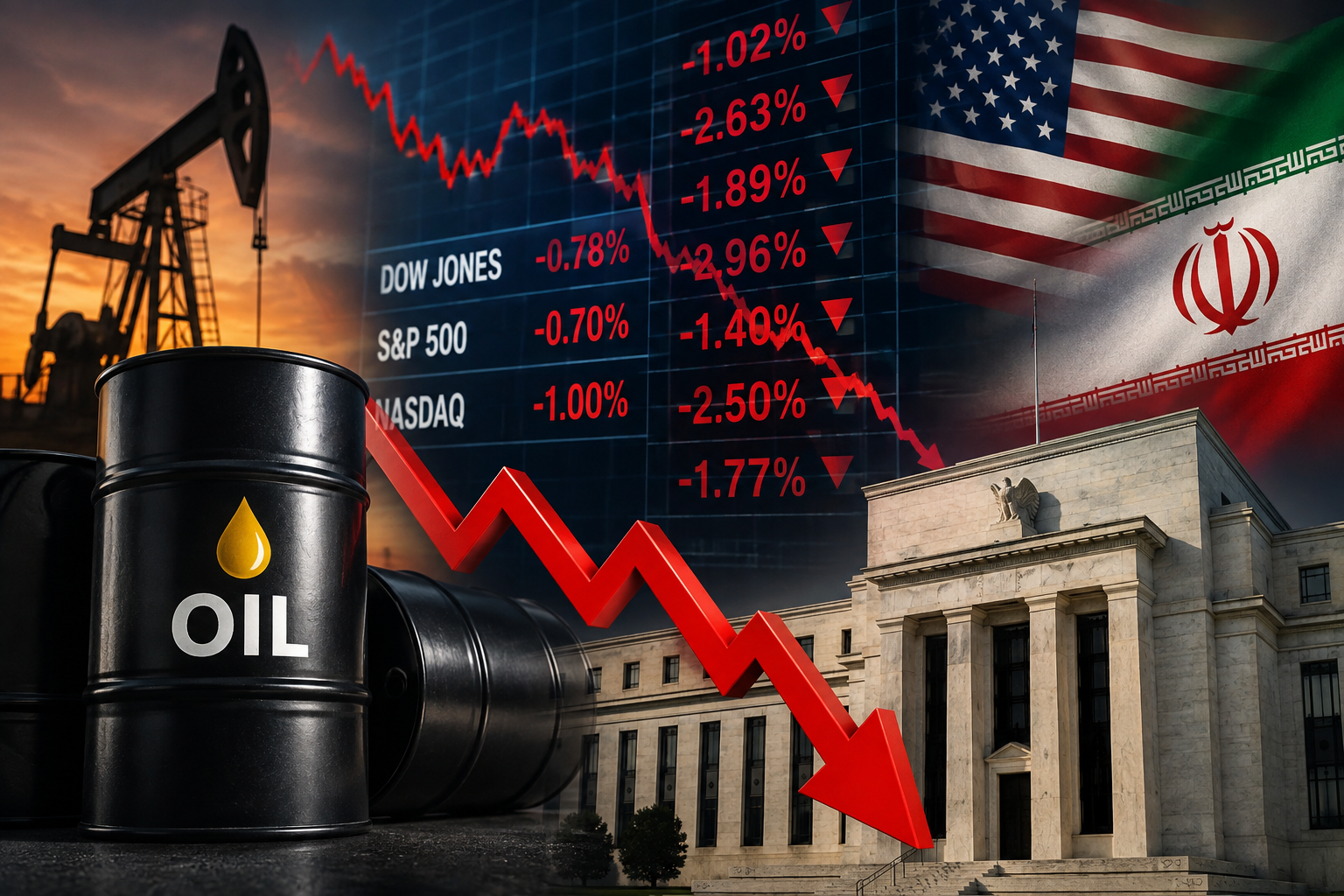
Latest Business News: Wall Street opened Wednesday, September 2, 2026, on shaky footing as a fresh spike in oil prices, climbing Treasury yields, and renewed military tension between the US and Iran combined to unsettle investors. The developments have reignited worries about inflation and pushed traders to reconsider whether the Federal Reserve still has room to cut interest rates this month.
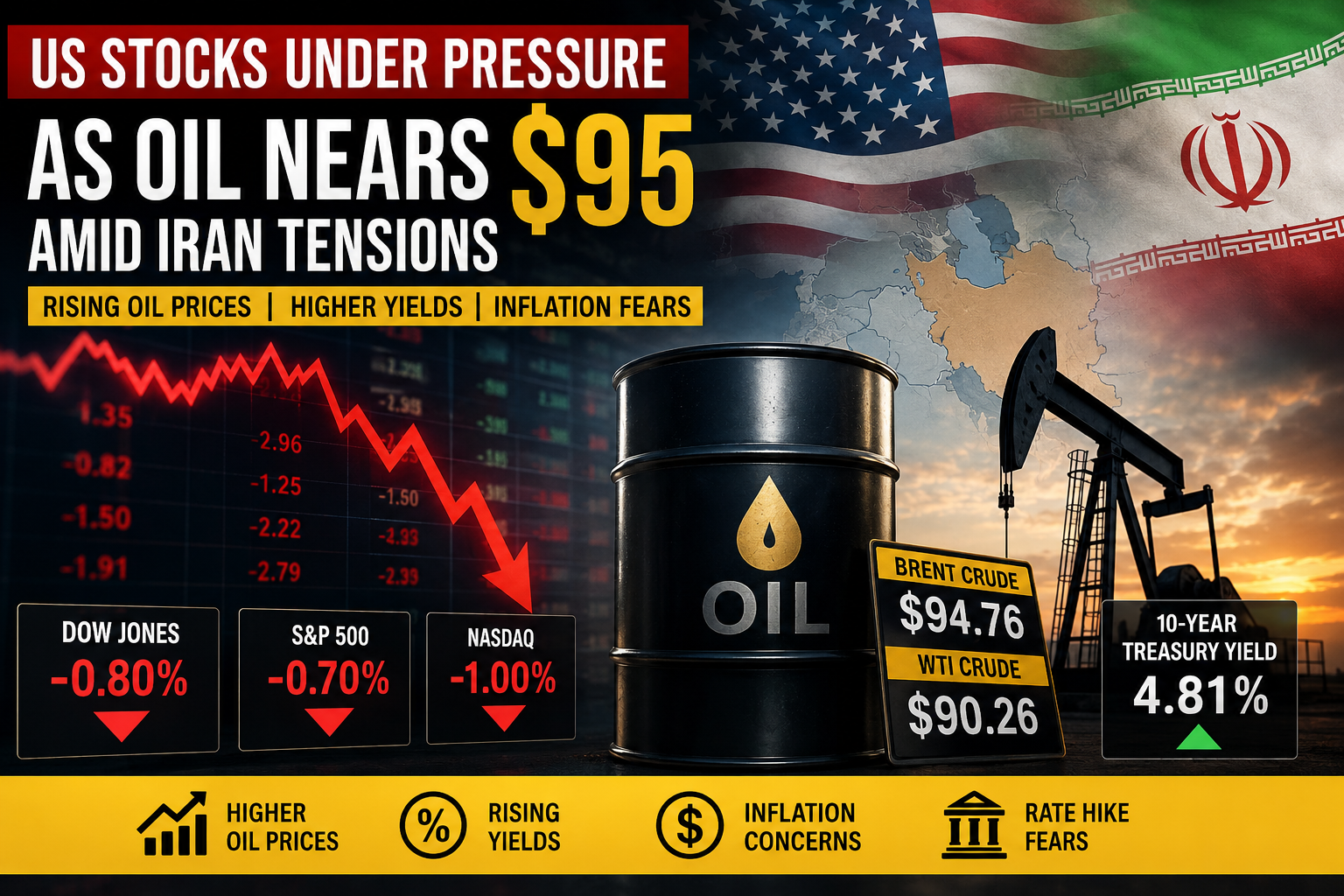
Brent crude pushed close to $95 a barrel, while the US 10-year Treasury yield rose to roughly 4.81% edging toward the closely watched 5% threshold. Markets are now zeroing in on three things at once: crude prices, incoming inflation data, and the Fed’s next move.
For households and businesses on both sides of the Atlantic, this matters because costlier energy tends to feed straight into inflation, borrowing costs, and consumer budgets.
What’s Driving Markets Today
Geopolitical tension in the Middle East is compounding pre-existing worries about inflation and government debt, and futures trading reflected that split mood Wednesday morning: Dow futures ticked up slightly, while S&P 500 and Nasdaq 100 futures slipped. Energy shares benefited from the crude rally even as investors grew warier of technology and other growth names.
That caution follows a rough Tuesday session, when the Dow Jones Industrial Average fell nearly 0.8%, the S&P 500 dropped about 0.7%, and the Nasdaq Composite lost close to 1%, with rising yields and oil prices cited as the main culprits.
Oil Climbs Toward $95 a Barrel
The sharpest move in today’s markets is crude oil. Brent was changing hands near $94.76 a barrel Wednesday, while US West Texas Intermediate traded around $90.26 both benchmarks sitting at their highest levels since late July.
At the center of the concern is the Strait of Hormuz, the narrow waterway that carries a large share of the world’s seaborne oil trade. Iran has reported incidents involving tankers in the strait, while US officials maintain that substantial oil volumes are still passing through. Even so, traders are pricing in the risk of a bigger disruption.
Some analysts caution that a serious supply shock could send Brent above $100 a barrel a threshold that would ripple through transportation, manufacturing, airlines, and logistics, and eventually show up in consumers’ fuel and heating bills.
Why Stocks Are Sliding
Investors are weighing three interlocking risks:
Inflation: Pricier oil raises operating costs across the economy, and companies often pass those costs on to customers, keeping inflation stubborn.
Interest rates: If inflation stays elevated, the Fed has less room to ease policy and traders are already recalculating the odds of a rate move this month. Higher rates raise borrowing costs and make bonds relatively more attractive than equities.
Treasury yields: The 10-year yield’s climb toward 4.81% near multi-year highs weighs especially hard on stocks whose valuations depend on profits far in the future.
The Fed’s Dilemma
The Federal Reserve is caught between two competing signals: a cooling US economy on one hand, and a fresh energy driven inflation risk on the other.
Hold rates higher for longer, and growth could slow further. Cut rates while oil is climbing, and inflation could prove harder to tame. That’s why markets are watching Friday’s jobs report so closely employment and wage data are central to how the Fed reads the inflation picture.
Why the UK Is Watching Too
This isn’t a US-only story. UK investors are tracking oil prices, gilt yields, and inflation expectations for the same reasons higher energy costs raise expenses for British households and businesses, and could complicate the Bank of England’s own path on interest rates.
A broader global bond sell-off has already pushed up borrowing costs in several major economies, with knock-on effects for mortgages, business loans, and government financing.
Tech Stocks Face Renewed Pressure
Technology shares have powered much of the market’s recent rally, but rising Treasury yields are a headwind for growth stocks in particular when yields climb, profits expected years from now are worth less in today’s dollars.
That doesn’t automatically mean a tech sell-off; it means investors are likely to get choosier. AI-linked companies, which carry some of the market’s highest growth expectations, could see more volatility than most. Strong individual results can still cut through the noise, though Dell Technologies, for instance, rallied sharply after raising its annual forecast, a reminder that company-specific strength still matters even in a jittery market.
Correction, Not Crash
It’s worth separating a normal market pullback from a deeper financial crisis. The current slide reflects several pressures arriving together oil, geopolitics, yields, inflation, rate uncertainty, government borrowing, and typical September seasonality rather than a single shock.
Notably, the S&P 500 remains up more than 11% for the year despite the recent weakness, suggesting much of the move may simply be profit-taking after a strong run rather than a signal of a broader collapse.
What Could Happen Next
Much depends on how the Middle East situation and this week’s economic data unfold:
- De-escalation scenario: If US-Iran tensions cool and oil supply stays steady, crude could pull back, easing inflation fears and helping stocks stabilize.
- Escalation scenario: If the conflict worsens and shipments through Hormuz are disrupted, a sustained move above $100 a barrel would add real inflationary pressure and complicate the Fed’s path a tougher environment for richly valued growth stocks and heavily indebted companies.
Key Things Investors Are Tracking
- Oil prices — whether Brent holds near $95 or breaks $100
- Treasury yields — the 10-year’s approach toward 5%
- Fed policy odds — shifting probabilities of a September move
- Friday’s jobs report — a key input for rate expectations
- Middle East developments — any sign of escalation or calm
The Impact on Everyday Consumers
This story goes beyond trading floors. If oil prices stay elevated, consumers could feel it through:
- Higher prices at the pump
- Pricier airline tickets
- More expensive shipping and delivery
- Higher costs for manufactured goods
- Broader inflation pressure
- Steeper borrowing costs if rates stay high
Businesses, in turn, may grow more cautious about hiring and capital spending if input costs keep rising.
Frequently Asked Questions
Is oil actually close to $100 a barrel? Not quite yet. Brent was trading around $94.76 and WTI near $90.26 on September 2 both near six week highs, but still short of $100.
Why are oil prices climbing? Renewed US-Iran military tension has raised fears of disruption to oil shipments through the Strait of Hormuz, a critical global energy corridor.
Why are Treasury yields rising? Investors are demanding higher yields amid concerns over inflation, energy costs, and heavy government borrowing.
Could the Fed raise rates instead of cutting them? Markets are increasingly weighing that possibility, though the outcome will hinge on incoming inflation and employment data.
Is this a stock market crash? Not by the numbers so far the S&P 500 is still up more than 11% year to date despite the recent pullback.
What happens if oil breaks above $100? It would likely add meaningful inflation pressure, raise costs across transport and manufacturing, and make it harder for central banks to ease policy.
Are tech and AI stocks at risk? They could see more volatility than other sectors, since higher yields discount future profits more heavily a dynamic that hits high growth valuations hardest.
What should investors watch this week? Oil prices, the 10-year Treasury yield, Fed rate-cut odds, Friday’s US jobs report, and any new developments between the US and Iran.
The Bottom Line
Global markets are entering a stretch of real uncertainty, as US-Iran tensions, surging oil prices, rising Treasury yields, and inflation worries combine to pressure stocks and complicate the interest-rate outlook.
For the US, the central question is whether this energy shock proves temporary or turns into a longer-running inflation problem. For the UK and Europe, the same pressures could make managing inflation and borrowing costs harder in the months ahead.
For now, the playbook for investors is straightforward: watch oil, watch yields, and watch the Fed. A cooling of Middle East tensions could let markets stabilize quickly but a sustained break above $100 a barrel would raise the stakes considerably. Friday’s jobs report and any fresh developments in the region are likely to be the next major catalysts.
Sources: Reuters, CNBC, Trading Economics